
Designing the Infrastructure Behind Modern Baggage Operations

Airport baggage handling systems are among the most complex material handling networks found in any transportation environment. Behind every checked bag is a carefully engineered system of conveyors, sortation equipment, screening interfaces, control systems, and operational processes working together to move baggage efficiently throughout the terminal. As passenger volumes increase and security requirements evolve, airports require baggage systems that can accommodate growing demand while maintaining reliability, flexibility, and operational efficiency.

System Planning & Layout Development


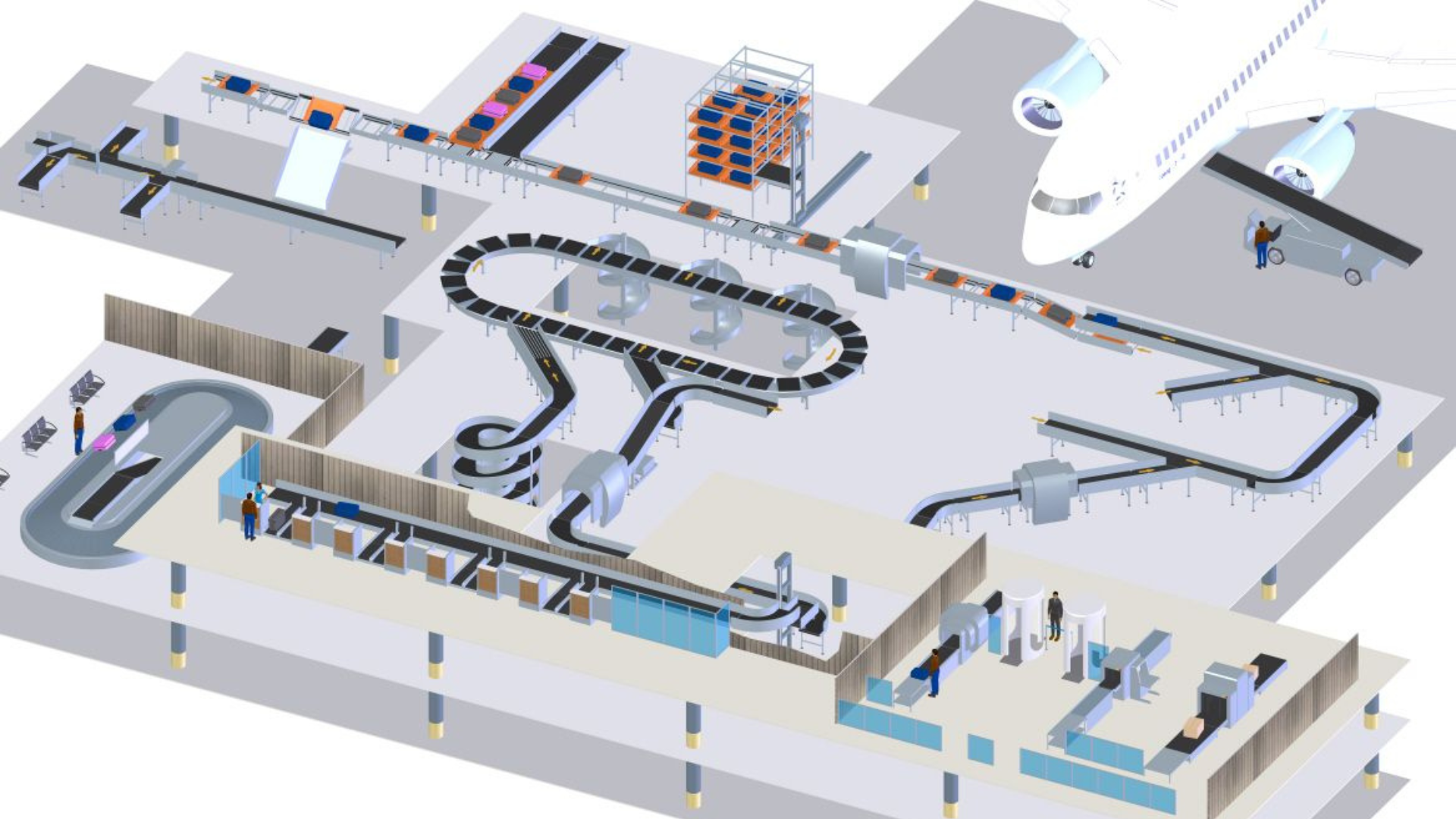
A well-designed baggage handling system depends on the efficient movement and routing of baggage throughout the airport. This requires the integration of conveyor networks, sortation equipment, accumulation areas, screening interfaces, and make-up facilities into a coordinated operational system.

Design considerations typically include:
• Conveyor routing and equipment placement
• Sortation methodologies and system logic
• Security screening integration
• Transfer baggage processing
• Early baggage storage requirements
• Redundancy and operational resilience
• Future expansion allowances

Each element must be carefully coordinated to ensure smooth baggage movement under both normal and peak operating conditions.

Conveyor Networks &

Sortation Design

The success of a baggage handling system is largely determined during the planning stage. Terminal layouts, passenger forecasts, airline operating models, aircraft schedules, and security requirements all influence the design of the overall network. Engineering activities focus on developing system architectures that optimize baggage flow while minimizing bottlenecks, transfer times, and operational complexity.

By evaluating passenger demand patterns and future growth projections, system layouts can be developed to support both current operational requirements and long-term airport expansion strategies. Careful planning also helps airports maximize available terminal space while ensuring that equipment remains accessible for maintenance and future modifications.

Supporting Airport

Growth

Baggage handling infrastructure represents a long-term investment that must remain effective for decades despite changing passenger volumes, airline requirements, and security regulations. Engineering therefore extends beyond the immediate project scope to consider scalability, maintainability, and future adaptability. Whether supporting a new terminal development, a baggage system expansion, or a modernization program, the objective remains the same: creating an efficient, reliable, and resilient baggage handling network that supports airport operations while maintaining a high level of service for passengers and airlines alike.

Prev
Next
quick contact: